
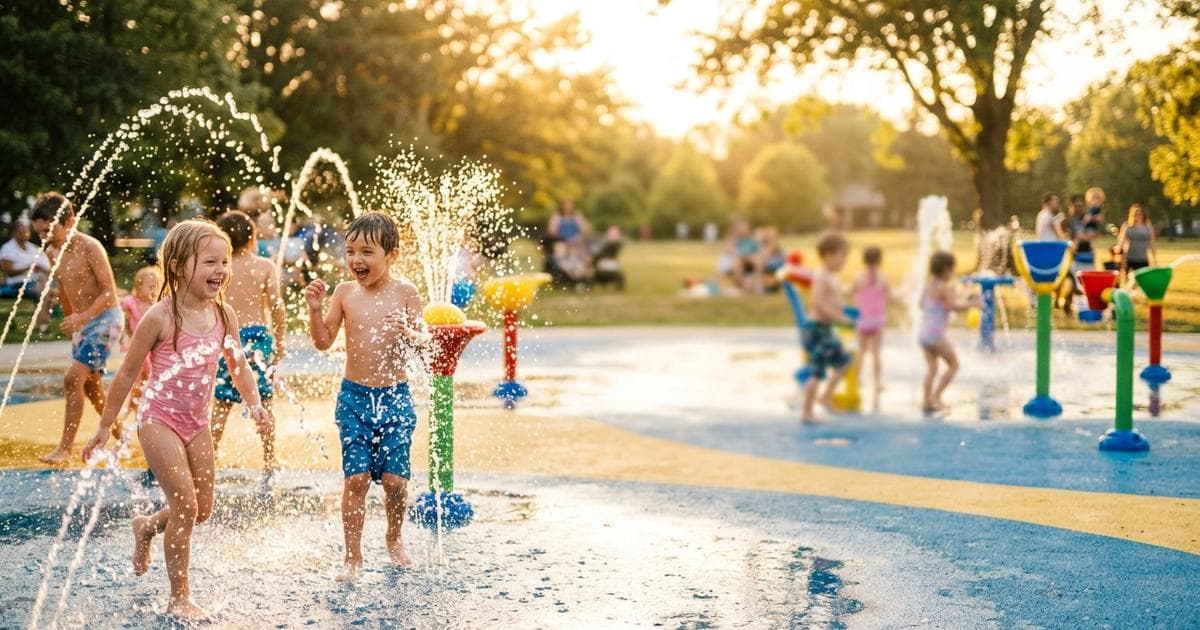
Summer break in the Triangle runs somewhere around ten or eleven weeks, and by the second week the "we have nothing to do" chorus starts. I am not promising you a magical, Pinterest-perfect summer. I am giving you the loose framework I actually use, the camps worth knowing about, and the free water that keeps us sane in July. The goal is everyone fed, safe, and mostly happy. That is a win.
The basic daily framework
Most moms I know do not run a rigid hour-by-hour schedule. What works is anchoring one part of the day and letting the rest flex. The morning is your active, out-of-the-house block. Afternoons go soft on purpose, because nobody wants to be outside at 3 p.m. in August.
Here is the shape of a typical day:
The one rule worth holding: protect the morning active block. If that happens, the day usually holds together even when everything else falls apart.
A realistic camp strategy
Almost nobody I know does one continuous camp all summer. Most families stitch together a patchwork: a couple of camp weeks, a couple of grandma weeks, a couple of survival-mode weeks at home. Build the patchwork early, because the good weeks fill up.
Budget-friendly camps
Specialty camps (the splurge weeks)
These run pricier, often a few hundred dollars a week, so I treat them as one or two highlight weeks rather than the whole summer. Confirm current rates and ages on each provider's site, since they change yearly.
These are real institutions worth the splurge if your kid is into the theme, but check the current catalog and ages before you build your week around one.
Plan for the no-camp weeks
Budget at least two or three weeks with no camp at all. These are the weeks that need the most structure from you, which is exactly why a loose template helps.
A no-camp week template
This is not gospel, it is just a rhythm that keeps a blank week from swallowing you. Adjust to your kids and your weather.
The trick is that each day has exactly one anchor. You do not need to fill the whole day. One thing on the calendar is enough to give the day a spine.
Free water to beat the heat
Triangle summers are hot and sticky. June is manageable, July and August are brutal. The free splash pads and spraygrounds are genuinely the backbone of an affordable summer, so here are the ones I trust. Confirm the current season dates and hours before you load up the car, since they run seasonally and close in bad weather.
Free splash pads in Raleigh
The City of Raleigh runs three free splash pads with no admission fee, generally open daily during the warm months from morning until evening, weather permitting:
Free water in Cary and Apex
Lakes for actual swimming
When the kids are old enough to want real water, the lakes deliver. Jordan Lake State Recreation Area is about a half hour west of Raleigh and has several sandy swim beaches, with Ebenezer Church, Seaforth, and Parkers Creek among the family-friendly ones (Ebenezer and a few others have playgrounds right by the beach). Falls Lake is the closer option to the north.
Free library programs
Both county systems run free summer reading programs every year, usually launching in June and running into August, with reading trackers and weekly events at every branch. No card or registration is required to participate in the basics, though a card is worth getting anyway.
How to pick the right summer setup
There is no single right answer, so match the plan to your actual situation:
A word on screen time
Summer screens are a fight you do not have to win every day. The approach that actually holds up in most houses I know:
Frequently asked questions
When does summer camp registration open in the Triangle?
It varies by provider, but the city and town parks and rec camps tend to open registration in late winter. Raleigh's typically opens in mid-February, and popular weeks fill fast. YMCA and specialty camps open on their own schedules, often early in the year. The safe move is to check each provider's site in January and set reminders, because the best weeks are gone within days at the popular programs.
What are the free splash pads near Raleigh?
The City of Raleigh runs three free splash pads with no admission: Gipson Play Plaza, John Chavis Memorial Park, and Moore Square. Cary's Jack Smith Park sprayground and Apex's Splashlantis at Pleasant Park are also free. They run seasonally and close in bad weather, so confirm current hours before heading out.
How much does it cost to swim at Jordan Lake or Falls Lake?
The state recreation areas charge a per-vehicle entrance fee plus a per-person swim fee during peak season, with reduced rates for kids. The exact amounts change, so confirm the current rates on the NC State Parks site. Swimming is only permitted in designated beach areas, not along open shoreline.
How do I keep kids busy on a no-camp week without spending much?
Give each day one anchor and keep the rest loose. A typical free or cheap week: a library program one day, a splash pad another, a home craft and bike day, a park playdate, and one small paid treat on Friday. You do not need to fill every hour. One planned thing per day is enough to keep the week from unraveling.
Are the summer reading programs really free?
Yes. Both Wake County and Durham County libraries run free summer reading programs with trackers and events at every branch, and no purchase or registration is required to take part in the basics. A library card is free and worth having, but you can pick up a reading tracker without one.