
I've lived in a few different parts of Raleigh over the years and toured a lot more while house hunting, and the thing nobody tells you is that "Raleigh" isn't one place. It's a sprawling, fast-growing city where the right neighborhood for your family depends almost entirely on your non-negotiables: schools, commute, price, or vibe. So this is my honest take on the areas families actually land in, what each one is really like, and the practical stuff (pools, school assignment, traffic) that makes or breaks day-to-day life with kids.
One big thing to know up front: in Wake County, your assigned public school is not always the closest one to your house. The district uses a base-assignment system plus magnet and application schools, so two houses on the same street can sometimes feed different schools. Always verify before you fall in love with a listing. More on how to do that at the end.
North Raleigh
This is the classic family choice, and for good reason. The corridor along Falls of Neuse Road and Six Forks Road is full of swim-and-tennis neighborhoods, strong school assignments, and every errand-running chain you could need. It trades walkability and character for space, newer construction, and a lot of kids the same age as yours.
Bedford at Falls River
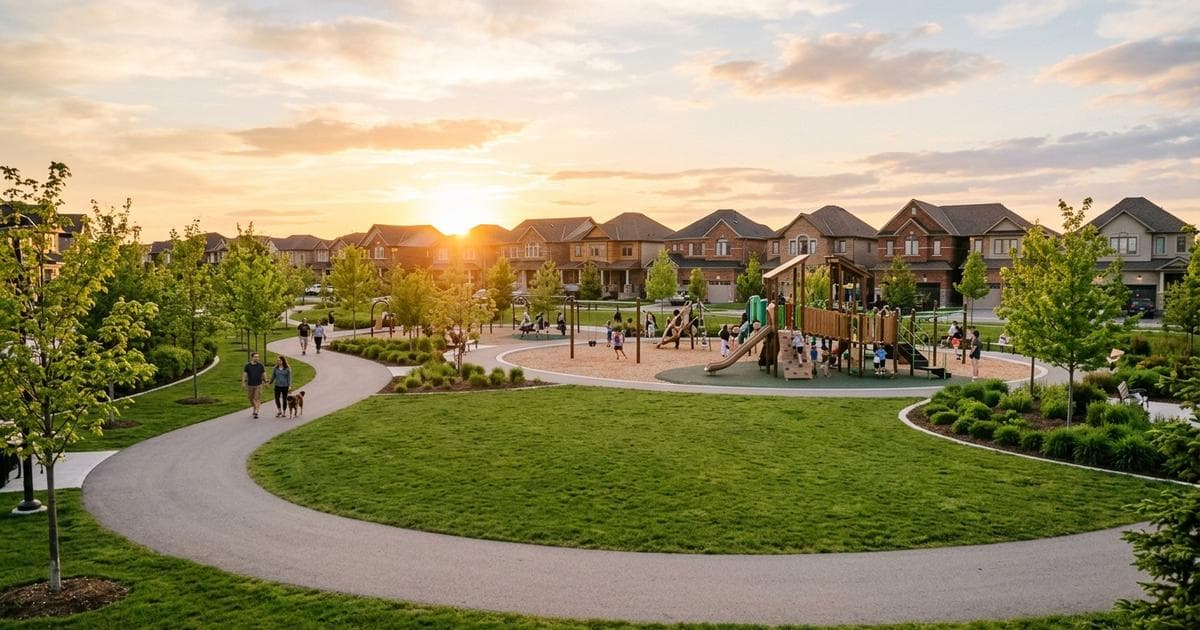
A large, master-planned swim-and-tennis community in North Raleigh built around a wholesome, small-town theme. It is genuinely amenity-heavy, with a big community swim club, multiple playgrounds, courts, and covered picnic areas, which is exactly what you want when you have little kids and long summers.
Wakefield
If your dream is "everything in one place," Wakefield is the textbook version. It is a master-planned community in northeast Raleigh with pools, walking trails, a town center with shops and restaurants, and schools built right into the community.
North Hills and Midtown
If you want a walkable, urban-suburban hybrid, the North Hills area (now branded as Raleigh's "Midtown") delivers. It's centered on the North Hills shopping district with restaurants, a movie theater, and year-round events, plus a real park in the middle of it.
Inside the Beltline
Living "ITB" is a bit of a Raleigh badge of honor. These older neighborhoods have mature trees, real architecture, and walkability you simply cannot get in the suburbs. The honest trade-offs: smaller, older homes for the money, and school assignments that vary more, though the magnet and application options downtown are strong.
Five Points and Hayes Barton
This is the postcard version of historic Raleigh: early-1900s homes, tree-shaded sidewalks made for stroller laps, and a walkable little commercial node where five streets meet, anchored by a classic neighborhood pizza spot. Hayes Barton, right next door, is the grander, pricier sibling.
Oakwood and Mordecai
Just east of downtown, Oakwood is Raleigh's first historic district, full of Victorian homes and some of the best front-porch culture in the city. Mordecai sits right alongside it. It's a more attainable ITB entry point than Five Points, though "attainable" is relative here.
West Raleigh and the Umstead Area
Near Umstead State Park
If your family is the outdoorsy, get-us-to-a-trailhead type, the neighborhoods near William B. Umstead State Park are worth a look. You get wooded lots and easy access to real hiking, with the trade-off of a longer drive into downtown.
Southeast Raleigh
Often overlooked, Southeast Raleigh is changing fast. It has historically been one of the more affordable parts of Raleigh proper, and the city has been investing in parks, greenway connections, and community spaces. If you want to be in the city without the ITB price tag, it deserves a real look rather than a drive-by dismissal.
How to pick the right Raleigh neighborhood
Start with your single biggest non-negotiable and let it lead.
A few honest house-hunting habits that have saved me grief:
Frequently asked questions
How do I find out which schools a Raleigh address is assigned to?
Use the Wake County Public School System base-assignment lookup tool, which lets you enter a residential address and see the assigned base elementary, middle, and high schools, plus calendar and transportation details. There's a separate lookup for magnet, early-college, and application schools, since those are options you apply to rather than automatic assignments. Always check the exact address, because assignments don't strictly follow proximity here.
Which Raleigh neighborhoods are most affordable for families?
Generally, Southeast Raleigh and some North Raleigh areas tend to stretch a family budget further than the Inside the Beltline neighborhoods, which carry a premium for walkability and historic character. That said, the Raleigh market moves quickly, so treat any price impression as a starting point and confirm current listings for the specific streets you're considering.
Inside the Beltline or the suburbs for a young family?
It comes down to what you'll use daily. Inside the Beltline neighborhoods like Five Points and Oakwood give you walkability, mature trees, and proximity to downtown, but usually smaller, older, pricier homes. North Raleigh communities like Bedford and Wakefield give you more house, newer construction, and amenity-packed pools and playgrounds, with more driving and less character. Neither is "better." Match it to how your family actually spends a Tuesday.
Do Raleigh family neighborhoods have community pools?
Many of the master-planned North Raleigh communities, such as Bedford at Falls River and Wakefield, are built around swim-and-tennis amenities with community pools, which become the summer social hub for families with young kids. Older Inside the Beltline neighborhoods usually don't have a shared neighborhood pool, so families there often rely on city pools, club memberships, or splash pads instead. If a pool matters to you, confirm exactly what membership or HOA access a specific community includes.
Is Raleigh a good place to raise a family?
I'm biased, but yes. You get a genuinely wide range of neighborhood styles, from walkable historic districts to amenity-rich suburbs, a large public school system with base and magnet options, and easy access to parks and greenways across the area. The catch is that it's grown fast, so traffic and home prices have climbed, and the right fit really does come down to nailing your non-negotiables before you start touring.